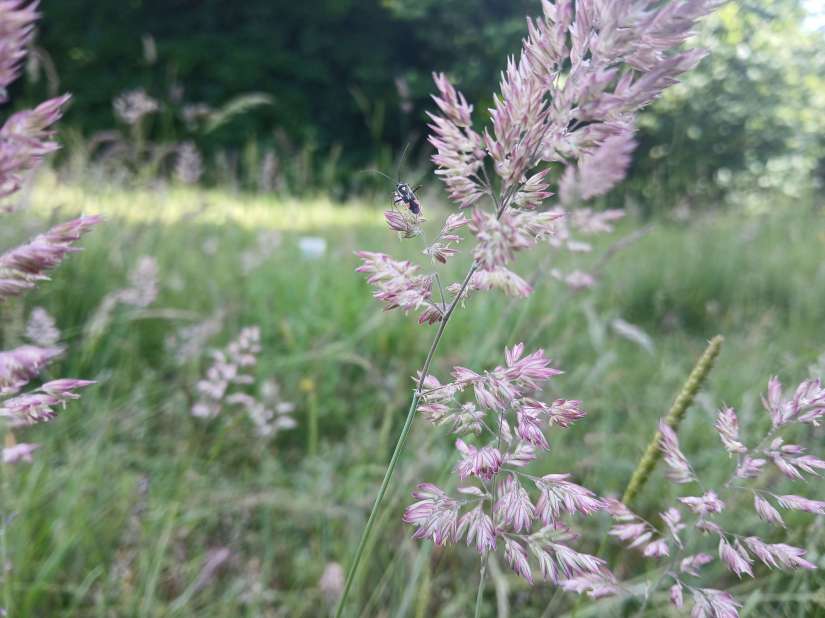
Fronds of pink tinged grass, with a black and orange bug resting on a floret
blog, monthly update

June Update

I’ve been trying to stay off screens when I can… only somewhat successfully. It’s tricky being stuck at home (yay chronic illness) when everything – writing, entertainment, connection with friends, even my weekly meditation class – are restricted to phones and computers. Sigh. It’s a work in progress. At least we have books. Of which there were MANY this month.

From the Bookshelf

In contrast to the usual breezy vibes of the summer reading season, I’ve been up to my neck in ghosts this month. Ghost Bride by Yangsze Choo took a journey through the fascinating mythology of Chinese Malaysian afterlives, and The Warm Hands of Ghosts by Katherine Arden played with the temptation of oblivion when the world is filled with horror. Jesmyn Ward’s Sing, Unburied, Sing was intense and brutal, a vivid exploration of the legacy of antiblackness in the US South. I’m also going to group Bad Cree by Jessica Johns in with hauntings, as the protagonist’s dreams are stalked by a creature of greed and hunger.

Concepts of ghosts and spirits are near ubiquitous around the globe, but every culture has their own take on it, and my favourite thing about reading lots of ghost books has been observing where traditions meet and diverge. The final book in this little study will be K. Ankrum’s The Corruption of Hollis Brown, which I’m very excited for – Icarus was one of my favourite reads last year.

From the Garden

Lots of things happening in the garden, but not too many photos of them: a bout of high winds, torrential rain and hail (yes, HAIL. in JUNE.) whipped the flowers off the more delicate plants, as well as the seed heads off the aquilegia I really wanted to harvest. The sweet peas took a battering, but they’ll be right as rain again before long. Enough of them opened a flower or two, letting me I’d botched the planting. I was aiming for my usual arrangement, reds, pinks and whites in one spot, purples and blues in the other. Instead, I’ve just got purples everywhere, with reds and whites in clusters. Whoops.
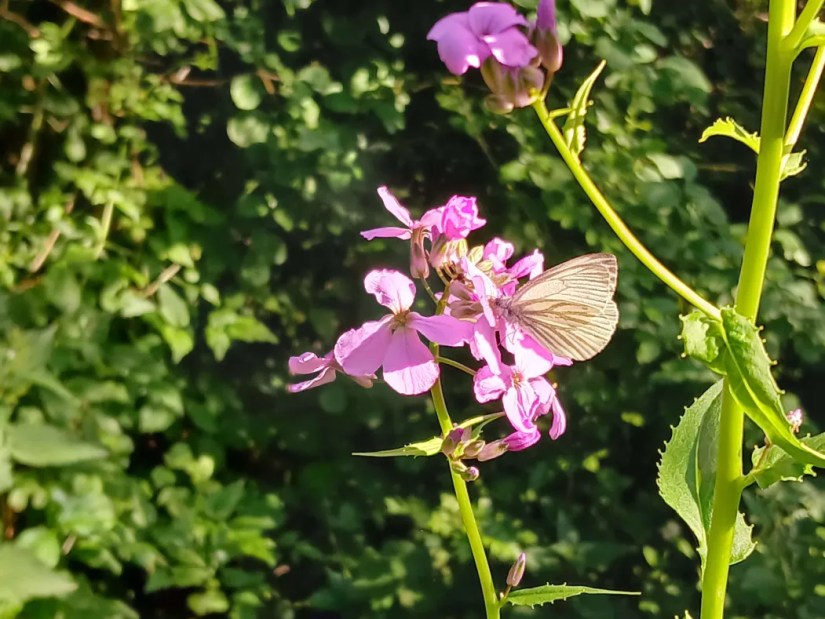
a white butterfly with light brown markings feeds from a pink, four-petal flower in bright sunshine
(It was very sunny that day, all the photos look badly edited)

I did manage to capture some butterfly appreciation the very day before the bad weather swept in. I hadn’t heard of dame’s violets before researching native plants for this patch of garden, but I’ve fallen head over heels in love with them, and the butterflies have too. They’ve gone to seed now, so I’m hoping to propagate them in situ. Check in next year to see I have any success πŸ™‚

Fronds of pink tinged grass, with a black and orange bug resting on a floret

Finally, have some pretty grass. I give a lot of attention to flower here, but grass (and trees and shrubs and fallen leaves and piles of sticks and bare dirt) is hugely important to the resilience of a wildlife garden. Now that No Mo May is over we’ve had to cut down some areas of lawn for the dogs, but we’ve left what we can to grow longer, which creates a dense habitat for insects, feeds birds, and protects the whole mini-ecosystem during the inevitable heatwaves. (Seriously, the long grass is most resilient area of my garden during extreme heat. It’s magic. Everything else will shrivel and die, the soil will bake hard, but the long grass just turns golden up top, with green growth below and happy soil. Highly recommend.)

Thanks for reading!
blog, monthly update

May Update

This month involved a LOT of checking the weather forecast. After an unbelievably wet start to the year, we predictably swung into a dry spell at an inconvenient time for the garden. I’ve also been checking my emails too much, waiting for responses about my faerie book currently in the query trenches (which is living up to its name). But other than that, I’ve been listening to Noah Kahan’s new album on repeat and trying to finish some of the knitting projects that have been sitting half-completed in my basket for… too long. It’s a work in progress!

From the Bookshelf

And there have been so many great books this month! The highlight is obviously the new Murderbot book, Platform Decay. It felt like spending time with a beloved old friend after too long. I also finished The Buffalo Hunter Hunter, which was an utter gut punch, and I can’t stop thinking about the pure evil that was the near eradication of bison in North America, all for the sake of destroying the Native peoples who lived along side them. The Buffalo Hunter Hunter is fiction, of course, but the horror of the real historical context is just as horrifying as the existence of vampires.

As research for my current novel, I read The Wager by David Grann and Sons of the Waves by Stephen Taylor. Both of them cover aspects of nautical history, with The Wager addressing the disaster of a specific shipwreck, while Sons of the Waves takes snapshots of naval life through the 18th and 19th centuries. They take a very different approach to conveying history, each with strengths and weaknesses. The Wager is a kind of narrative nonfiction, with all the various sources compiled into a single story, told very engagingly. But by virtue of being an average of different perspectives, it flattens some of the reality that history cannot be definitively reconstructed, only interpreted. Sons of the Waves, on the other hand, puts the focus on the oft overlooked common ship’s company – the non-officers – drawing from sources written by their hands alone, with a more traditional approach to conveying information. This makes it dryer (though still an enjoyable read) while maintaining the specificity of individual experiences. Overall, I think both books do a good job at what they set out to do.

From the Garden

While the annuals find their feet in the borders and the newly-sown perennials begin to bulk up in pots, there is a chance for the lawn to take centre stage. I am a massive fan of No Mo May, when we’re encouraged to hold of mowing the lawn for the month, letting wildflowers grow as vital food for bees, butterflies and all the other insects that pollinate our plants and feed our birds. It’s a single action (inaction, really!) that can have a lasting positive impact for our local ecosystems.

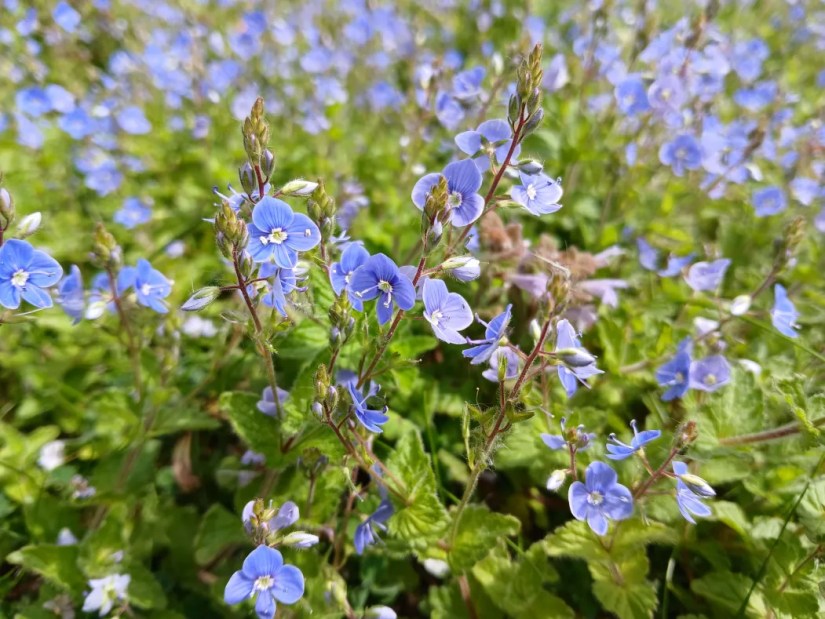
an abundance of tiny blue flowers with four leaves growing close to the ground

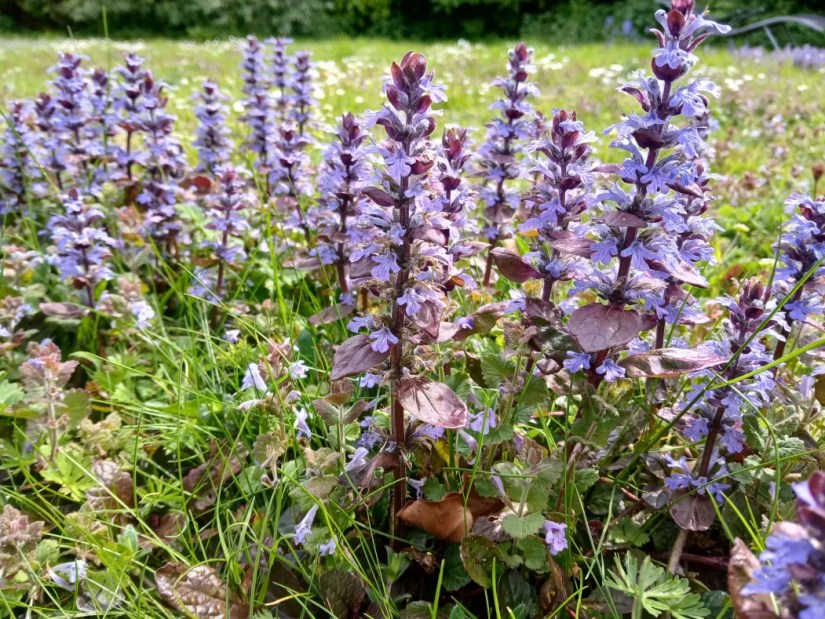
The more you do it, the greater the dividends. If you can let your lawn grow every year for as long as possible between cuts, then you’re likely to see a wide variety of flowers establishing. Daisies, buttercups, dandelions and clover are all common, but a few years of long growing periods has also blessed me with purple-blue carpets of speedwell, the sweet scent of violets, and novel eruptions of tufted vetch and forget-me-nots. Nothing makes me smile like a lawn full of flowers and the many happy bees and butterflies they support.

towers of pale purple flowers on stalks with reddish leaves emerging from grass

In keeping with the theme, I’ve also been addressing some patches of lawn that I’ve neglected a little too much, letting them get overgrown with brambles and thistles. The more I ignored it, the bigger the problem got, until the solution was to just dig the whole thing over. While a labour of love, it also gave me the opportunity to pick a grass mix that is better adapted to the dry, nutrient-poor soil than the existing grasses, most of which, at best, barely tolerate these conditions. I chose a mix specifically for chalk grassland, and mixed in seeds for bird’s-foot-trefoil, wild marjoram, clover and a couple of vetch varieties to give the area a bit of pizazz. I’ve experimented with native meadow mixes in the past, to great success in small patches, but this is the first time I’ve tried to pick plants that will mostly function as a lawn instead of, you know, a knee high meadow. I can’t wait to see how it grows in!